

What to Know About Oak Wilt
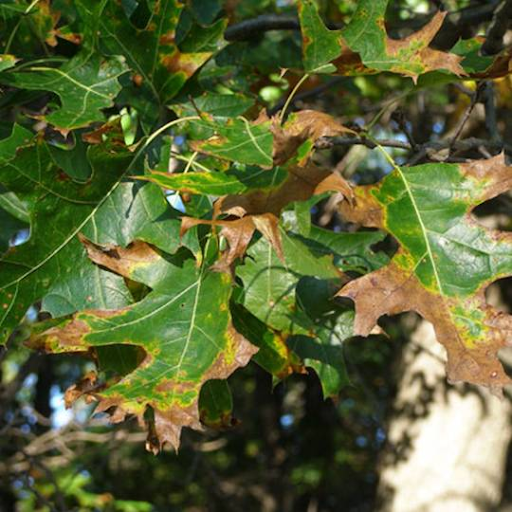
Our neighborhood is full of beautiful oak trees, and oak wilt came up at the Annual Meeting as a topic neighbors wanted to hear more about. Here’s what every homeowner should know.
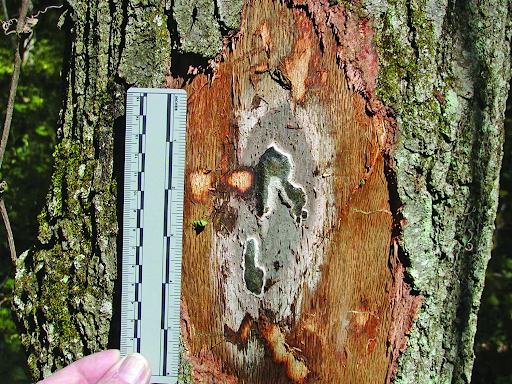 What is it?
Oak wilt is a fungal disease that kills oak trees. Red oaks (the ones with pointed, bristle-tipped leaves, like northern red oak, black oak, and pin oak) are hit hardest and can die within a few weeks of infection. There is no cure for an infected red oak. White oaks (rounded leaf lobes) are more resistant.
How does it spread?
Sap-feeding beetles carry spores from infected trees to fresh wounds on healthy oaks, mostly in spring and early summer. The fungus also moves underground through roots that graft between neighboring oaks, and over long distances in infected firewood.
How to prevent it
Don’t prune or wound oaks from April 15 to July 15. This is the high-risk period. The best time to prune is winter, when trees are dormant. Arborists book up, so schedule winter tree work in the fall.
If an oak gets wounded in spring or summer, cover the wound right away with tree-wound paint or latex paint. Beetles can find a fresh wound within minutes.
Be careful with mowers and string trimmers around oak trunks.
Don’t move firewood, especially oak, and don’t bring in firewood from unknown sources.
If you have Confirmed Oak Wilt:
Report it to the Michigan DNR using the Oak Wilt Interactive Mapping Tool, found on the DNR’s oak wilt page.
Inform your neighbors.
Consult a certified arborist and treat nearby trees with a fungicide to make the tree more resilient to the oak wilt fungus.
For the infected tree, cut the root grafts to help prevent spread.
Remove the tree when dormant. Even though the tree appears dead, there is still live tissue. As much of the tree should be chipped and removed. Burning the tree is also a good way to stop the fungus from spreading. Keeping the cut wood on your property can still spread the disease, so remove the wood or keep it completely covered for at least 2 years.
Related News Articles
We would love your feedback on the Neighborhood Garage Sale. Please take a minute to complete the survey below to let us know if you would like to continue with the spring garage sale and if you would like to also have one in the fall.
To make paying dues easier, the association has setup online payment.
Note: Support the 100% free platform we use” is a fee that goes to Zeffy. It is optional and not included in the dues to the association. It can be set to $0 if you choose.

When: Saturday, September 19th, 2026
Time: 9:00 AM
Location: Fire Station 2
18964 174th Ave.
Spring Lake, MI 49456
The Annual Garage Sale will not be organized this year due to the board members resigning.